
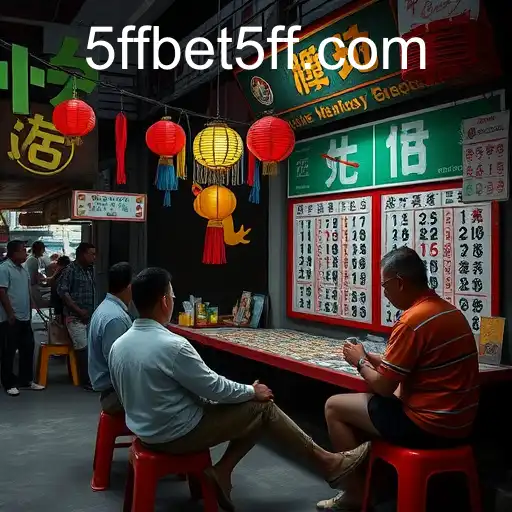
5ffbet | The Persistent Allure and Complexities of Jueteng: A Cultural Phenomenon in the Philippines
5ffbet’s An exploration into the enduring and controversial lottery game of Jueteng in the Philippines, examining its cultural significance, socio-economic impacts, and ongoing efforts for regulation.
The Persistent Allure and Complexities of Jueteng: A Cultural Phenomenon in the Philippines
Jueteng, an illegal numbers game deeply embedded in the cultural and social fabric of the Philippines, has proven resilient to government crackdowns and societal shifts. This underground lottery, believed to have originated from the term 'hue-teng', continues to captivate both participants seeking fortune and policymakers aiming to curb its influence.
Historical Background
Jueteng traces its roots to colonial times, signaling a longstanding relationship between risk and reward in Filipino culture. Introduced in the late 19th century, it was initially popular among Chinese immigrant communities and gradually diffused across the archipelago. Despite its illegal status, jueteng has endured throughout generations, finding patrons from all walks of life.
The Mechanics of Jueteng
This game of chance is relatively simple, involving bettors choosing a combination of numbers, typically 1 to 37. The draw process is conducted twice daily, with winning numbers determined by randomly selected small coded balls. Operators, known as 'cobradors', and bet collectors are pivotal in maintaining the flow of this underground economy, weaving a complex web that spans across neighborhoods.
A Cultural Staple Despite Legal Constraints
Jueteng's persistence can be attributed to its deep-rooted position in socio-economic contexts. It provides an accessible gambling option for those who might otherwise find legitimate gambling venues financially out of reach. This accessibility makes it appealing even in provinces where economic opportunities are limited, serving both as a means for economic relief and a channel for social interaction.
Compounded by the game's cultural entrenchment are the systemic issues that allow it to thrive under the radar. Corruption and complicity among local officials garner jueteng its notoriety as a 'protected' vice. The intricate relationships between operators, bettors, and protectors create a formidable challenge for law enforcement agencies tasked with its suppression.
The Economic Impact of Jueteng
Although jueteng may seem trivial at a glance, its economic impact shouldn't be underestimated. It generates significant sums of money that move seamlessly through informal networks, unrecorded by official economic metrics. In many instances, revenues from jueteng have been alleged to support campaign funds, augment police salaries, or contribute to clandestine projects.
While its proceeds inject liquidity into local economies, often, the vast majority of the rewards do not trickle down to the broader community. The concentration of winnings among operators and protectors fosters local economic disparities and can perpetuate cycles of poverty and dependency among low-income bettors.
Efforts Towards Regulation and Control
Efforts to dismantle jueteng have been episodic and largely unsuccessful, often hindered by the very same systemic issues it thrives upon. Various administrations have approached the problem with different strategies, from outright crackdowns to attempts at legalization or integration into national lottery systems.
In recent years, initiatives have been launched to provide alternative livelihood programs aimed at diverting reliance away from jueteng incomes. Furthermore, there have been propositions to institute community-based lotteries through governmental frameworks, channeling profits into development projects. These measures aim not only to curtail jueteng's popularity but also to present legal alternatives that incentivize community participation without punitive undertones.
The Role of Technology and Innovation
In an era increasingly dominated by digital innovations, technologies are being explored as potential tools against traditional gambling mechanisms. The proliferation of mobile and online platforms offers governance mechanisms that are more transparent and harder to manipulate illicitly. Digital currencies and blockchain technologies present opportunities for secure and accountable betting systems, although these are not without their challenges.
The Path Forward
The path forward for regulating jueteng involves a nuanced understanding of its cultural significance and economic role. Continuous dialogue among stakeholders, including governmental bodies, local communities, and financial institutions, is imperative. Innovative solutions balancing regulatory frameworks with cultural sensibilities are critical to any sustainable approach.
Ultimately, jueteng's allure lies at the intersection of tradition, hope, and economy. Its deeply embedded nature calls for strategic interventions that are culturally informed and economically viable, ensuring that communities can transition smoothly to legitimate and beneficial forms of economic engagement. As jueteng remains an indelible part of the Filipino socio-economic landscape, efforts towards its regulation and transformation continue to be a defining challenge.
